
Size charts for shoe stores on Shopify
Shoppers come from different sizing systems. Show US, UK and EU sizes side by side, with foot length so they can check their own measurement.
Shoe sizes are labels, not measurements, and every country uses different labels. US, UK and EU sizes don't convert one-to-one, US men's and women's sizes differ for the same foot, and two brands can put different labels on the same length.
That's why the most useful shoe size chart lists every system your customers use side by side, plus foot length, so a shopper can measure their own foot and check the number rather than trusting a label.
What your size chart needs
Sizes in every system you sell to
US, UK and EU shoe sizes don't line up exactly, and US men's and women's sizes differ. List each system in its own column.
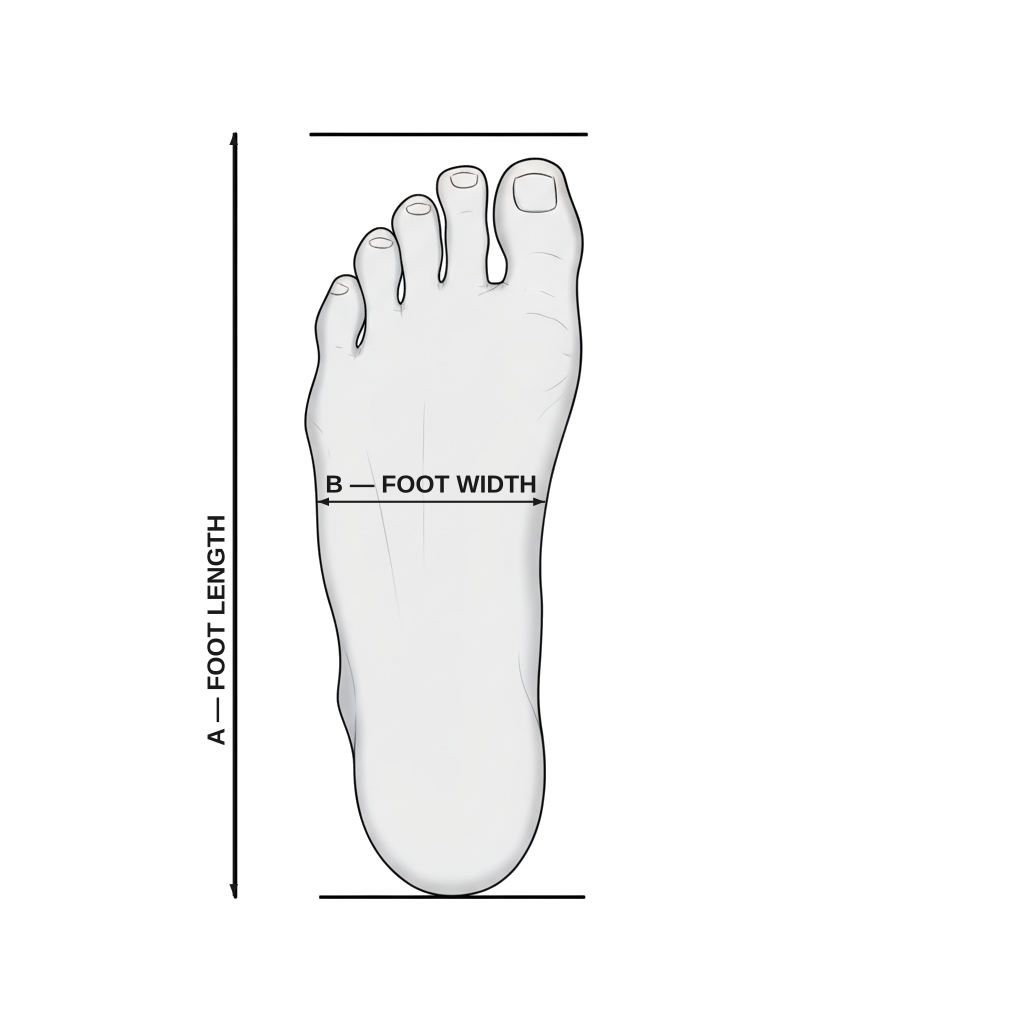
Foot length
Foot length is the most reliable way to choose a shoe size, because it's a measurement rather than a label. Add it to the chart with a short how-to-measure note.
Boot measurements
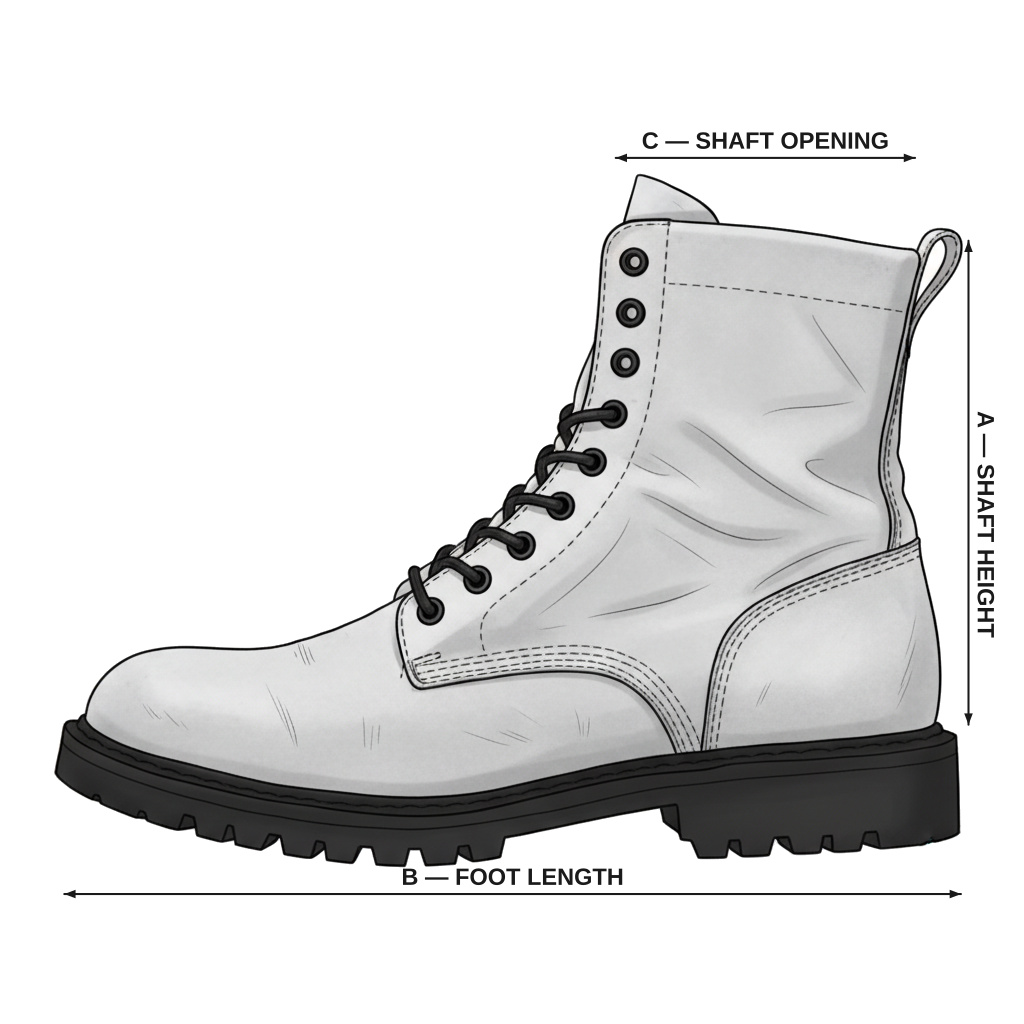
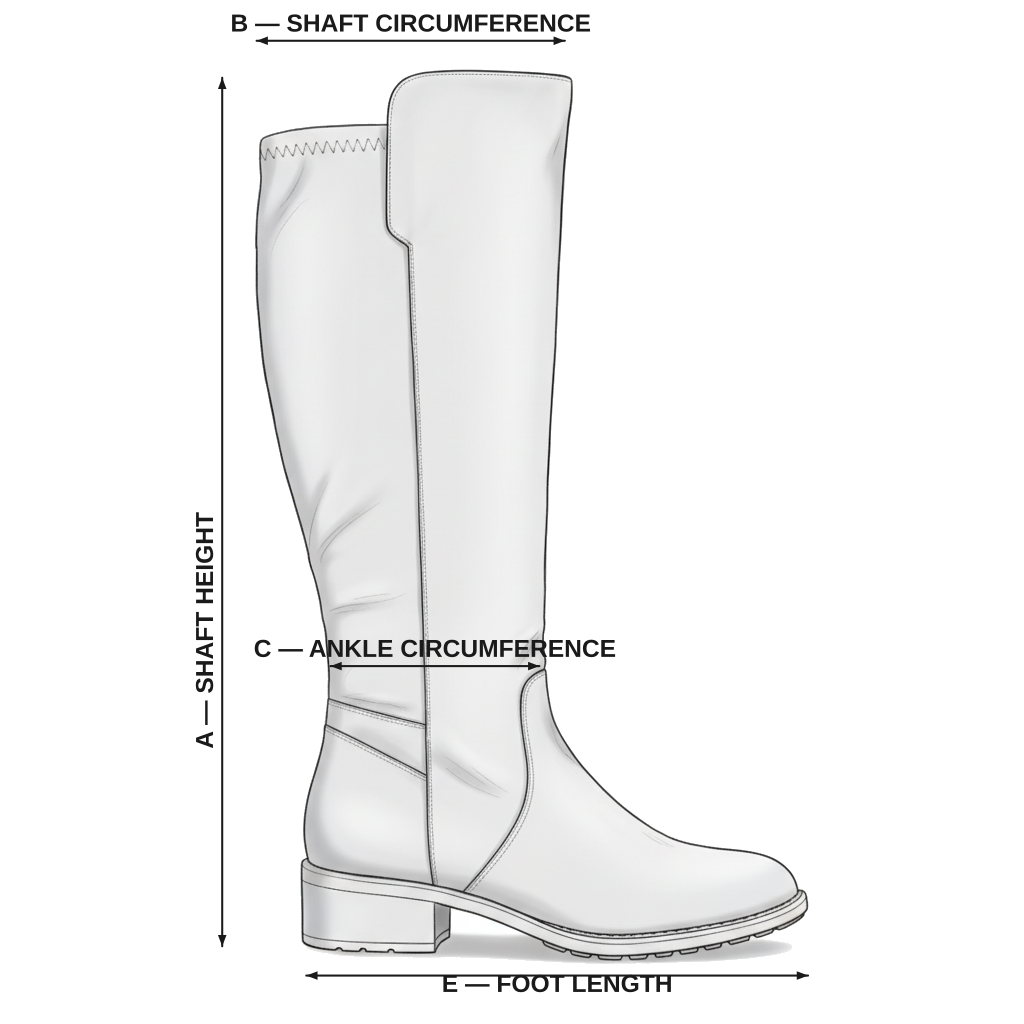
For boots, add shaft height and shaft circumference so shoppers know where the boot will reach and whether it will fit their calf.
What to measure, product by product
The measurements in each of our free templates for shoe stores. Use them as a starting point, then replace the numbers with measurements from your own products.
Example: Men's Shoes Size Chart
Open this template →Typical measurements from the template, in centimetres. Every brand fits differently, so measure your own products before you publish.
| US Size | UK Size | EU Size | Foot Length (cm) |
|---|---|---|---|
| 7 | 6 | 40 | 25.0 |
| 8 | 7 | 41 | 25.7 |
| 9 | 8 | 42 | 26.4 |
| 10 | 9 | 43 | 27.1 |
| 11 | 10 | 44 | 27.8 |
| 12 | 11 | 45 | 28.6 |
Measurements that matter
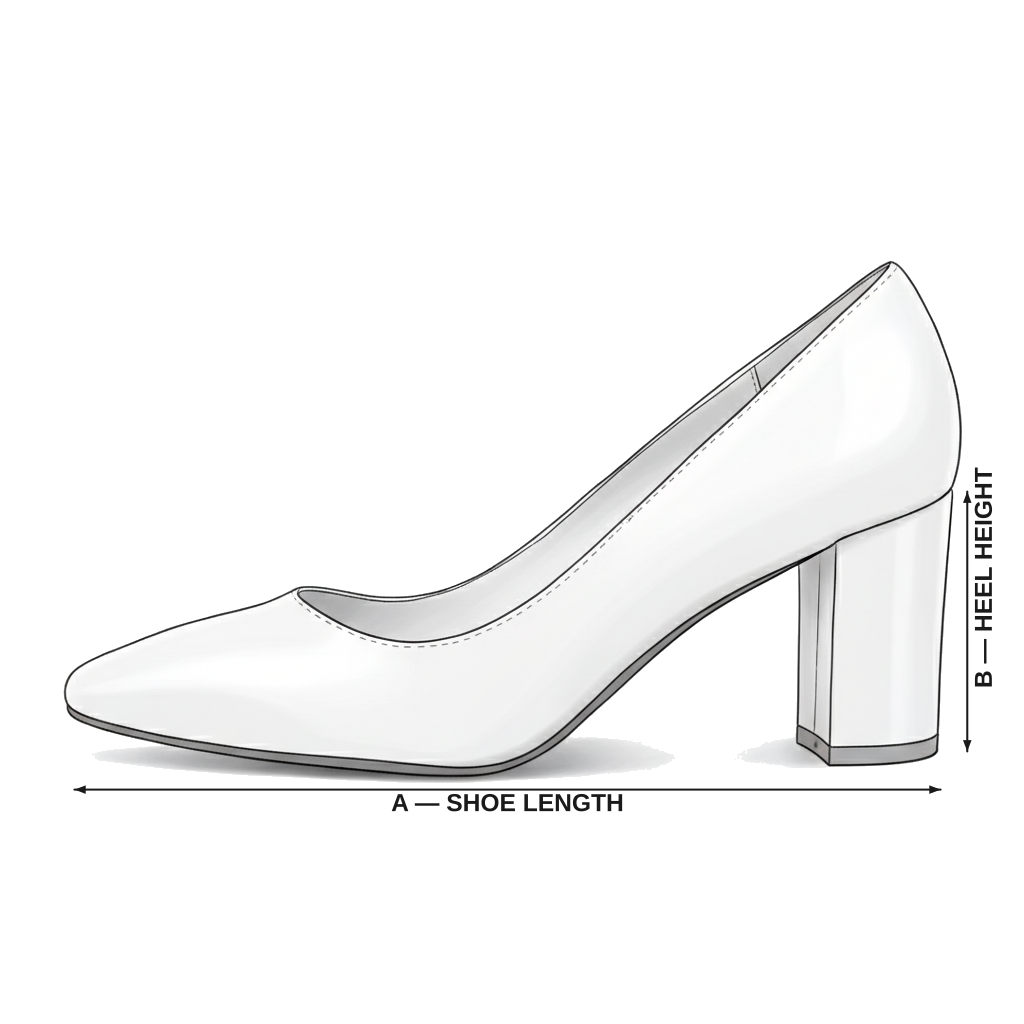
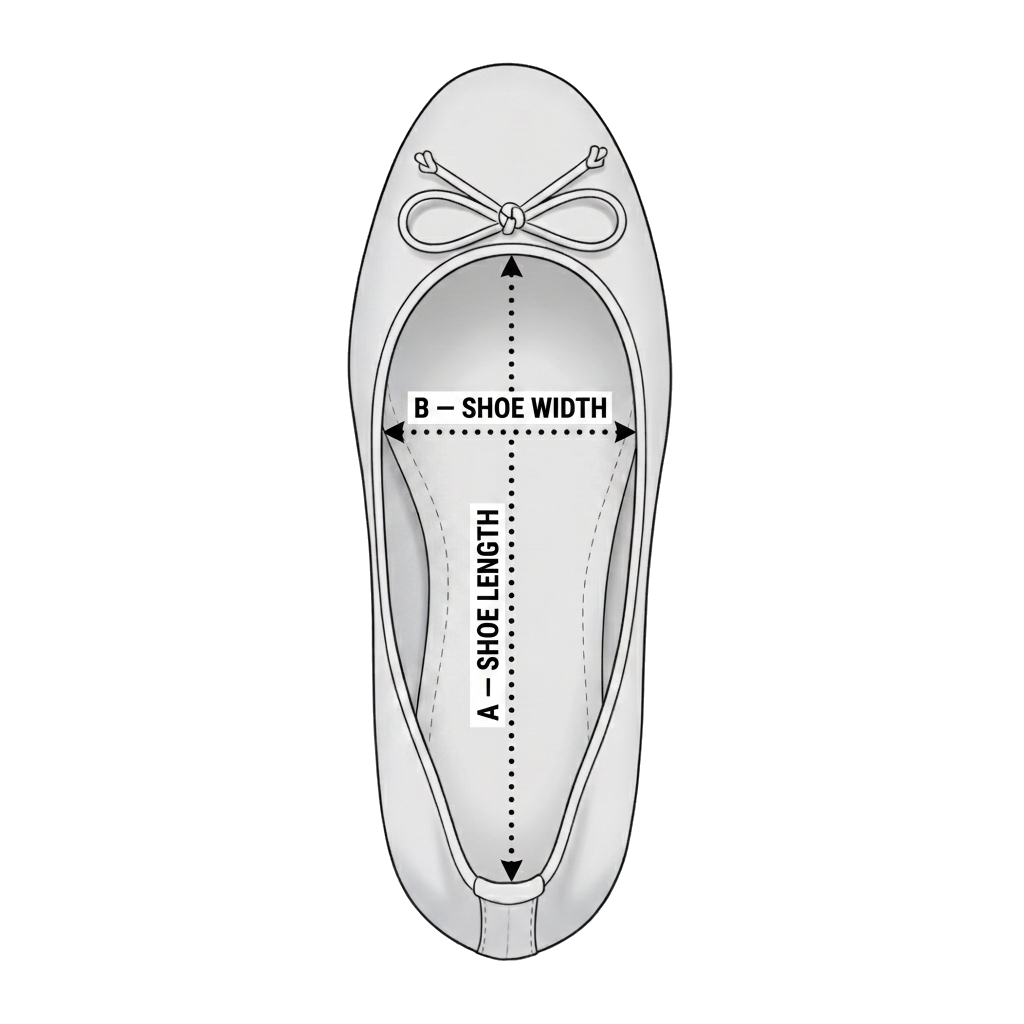
The distance from the back of the heel to the tip of the longest toe, the basis of shoe sizing.
How tall the upper part of a boot is, which tells customers where the boot will reach on the leg.
The measurement around the widest part of a boot's shaft, important for fitting the calf.
How high the heel of a shoe raises the back of the foot.
The unit of European shoe sizes: two thirds of a centimetre.
The unit behind US and UK shoe sizes: one third of an inch.
Common mistakes to avoid
Only your own country's sizes
A shopper in the UK reading a US-only chart has to convert it themselves, often with a different conversion table from yours. List each system in its own column.
Leaving out foot length
Without foot length, shoppers can only compare labels. With it, they can measure their foot and choose with confidence.
Converting size codes as numbers
A size chart that switches cm to inches must leave the US, UK and EU size columns alone. Converting "EU 42" as if it were 42 cm produces nonsense.
One chart for every style
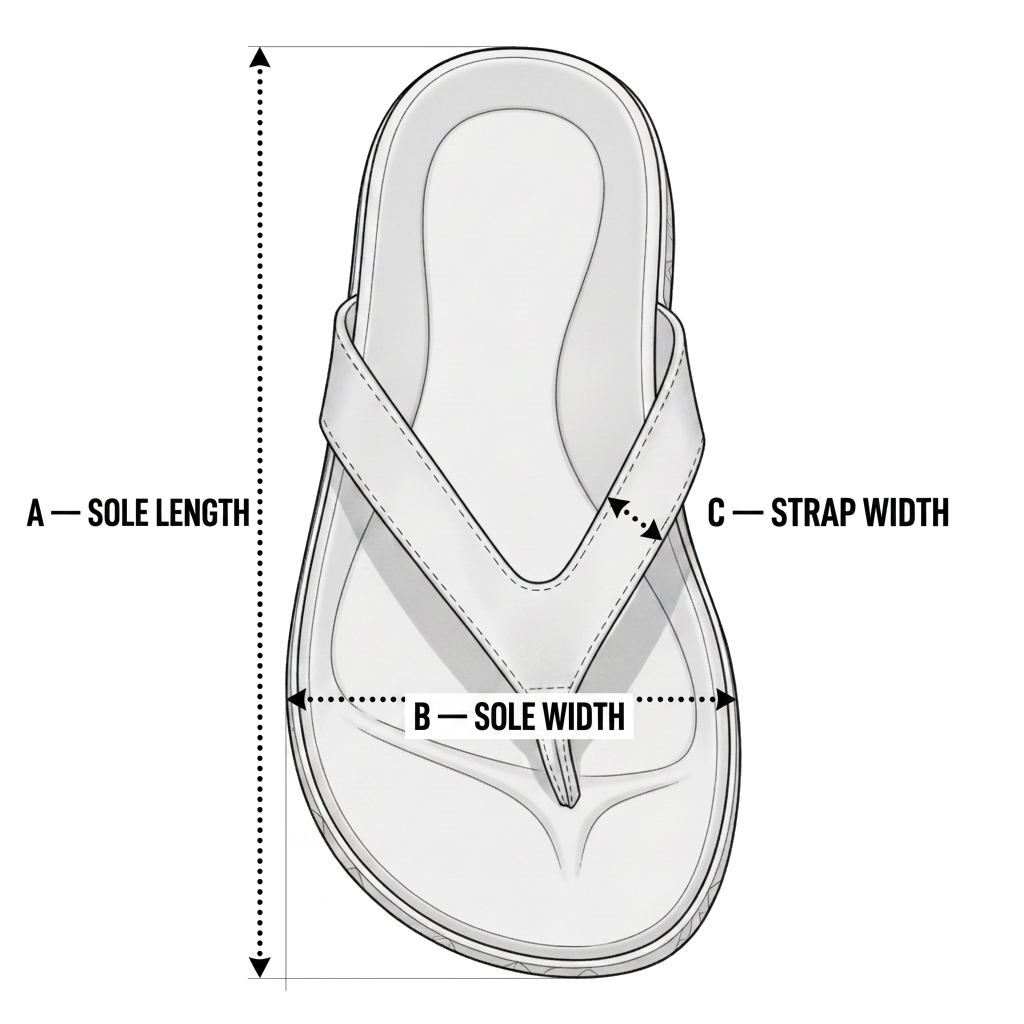
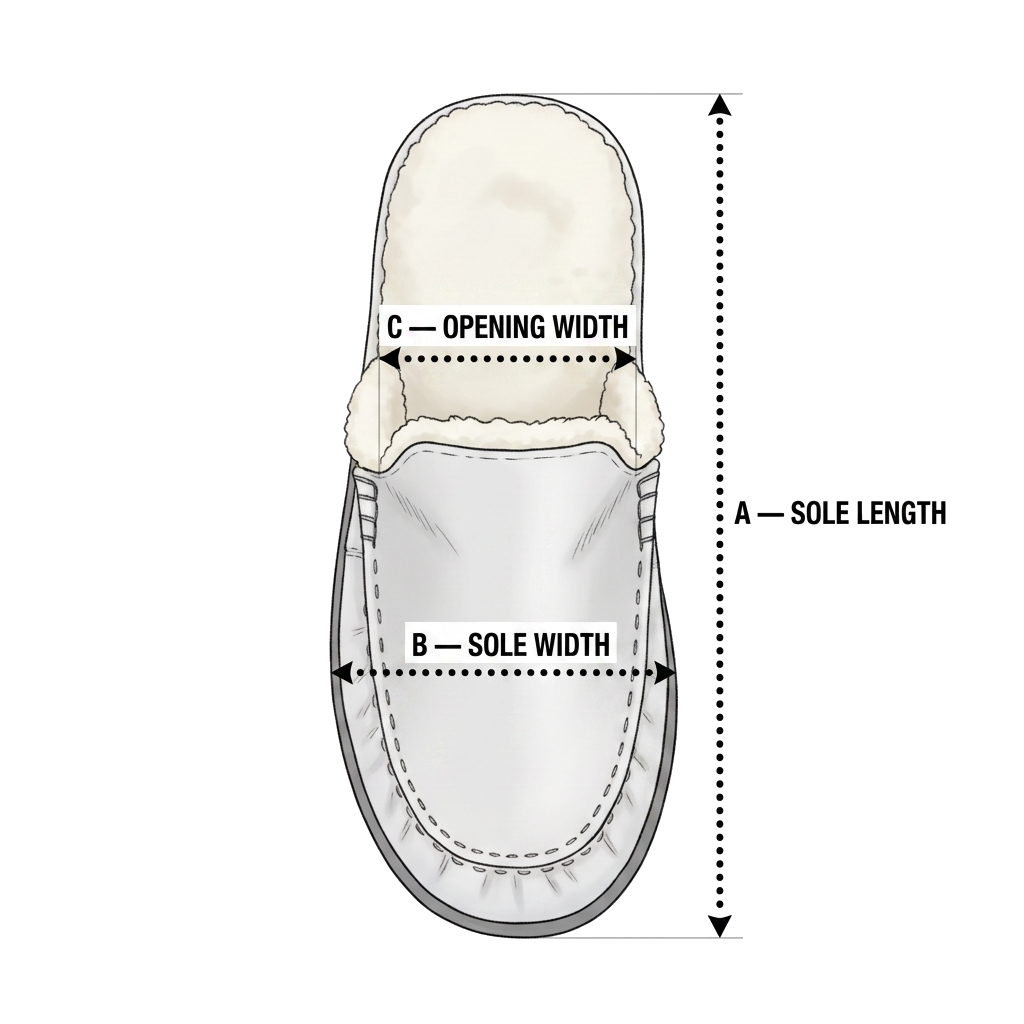
Boots, trainers and sandals from the same brand can fit differently. If they do, give each its own chart, or add a fit note.
Checklist before you publish
- Columns for every sizing system you sell to, labelled US, UK and EU
- US men's and women's sizes clearly separated
- Foot length for each size, with a short how-to-measure note
- Size columns kept as text, with only measurements converted between cm and inches
- Shaft height and circumference for boots
- A fit note: runs small, true to size, or wide fit
- The size chart link next to the size selector
Free templates to start from
All size chart templates →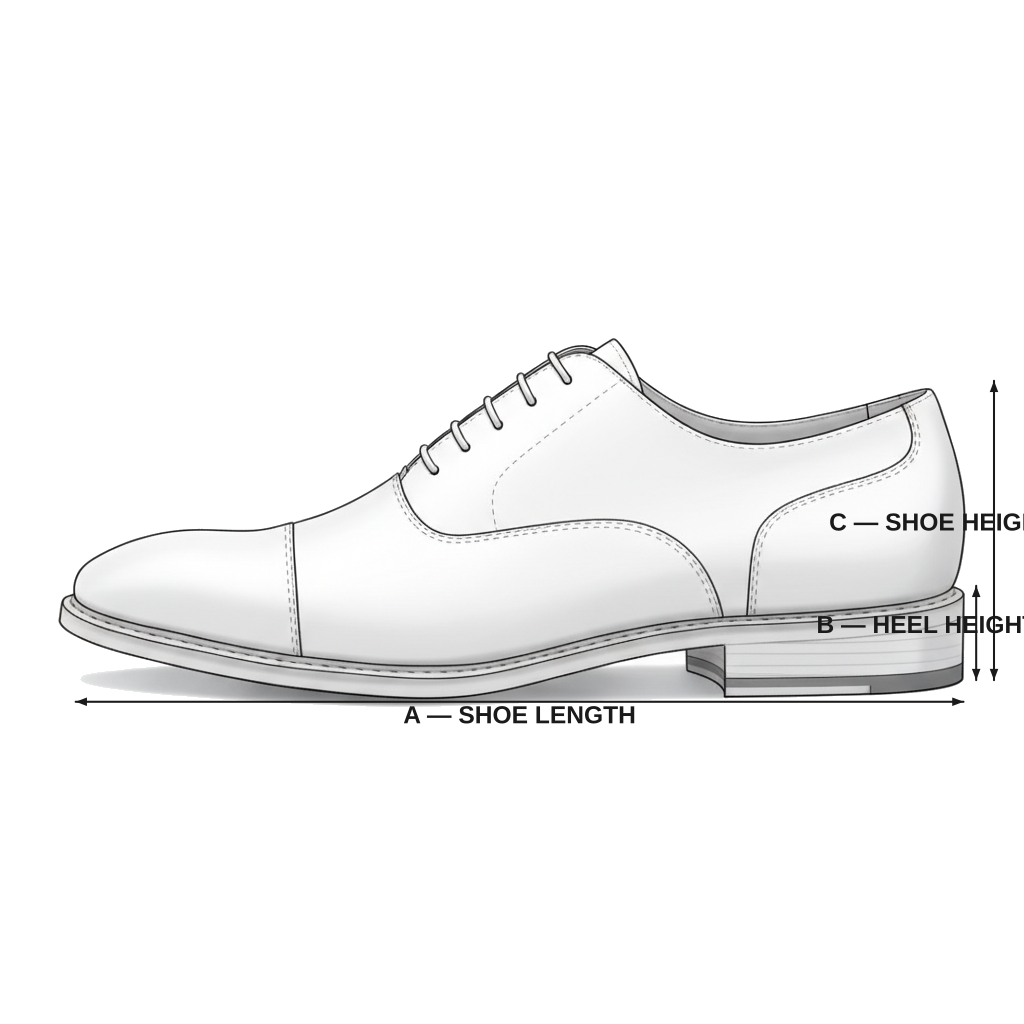
Set it up in Jotly
- 1
Create a chart from a template
Open Jotly in your Shopify admin, click Create Chart and pick a template, or start from scratch.
How to → - 2
Put in your own measurements
Edit the table, or import one from Excel, and choose the unit you measured in. Shoppers can switch between cm and inches.
How to → - 3
Assign it to your products
Assign the chart to products or collections on the Free plan, or to tags and vendors on the Global plan and above.
How to → - 4
Turn it on in your theme
Enable the Jotly app embed from the Settings page, then choose where the size chart button appears on your product pages.
How to →
How Jotly helps
Size codes that don't convert
Keep US, UK and EU size columns exactly as typed while measurement columns switch between cm and inches.
Learn more →Button next to the size selector
Put the size chart link right where shoppers pick a size. Placement next to the size label is included in the Essentials plan.
Learn more →Charts by brand
Brands size shoes differently. Assign a chart per vendor so each brand shows its own sizes. Included in the Global plan and above.
Learn more →Common questions
Can I use one conversion chart for every brand?
It's a reasonable starting point, but brands differ by up to half a size. If you sell several brands, a chart per brand with foot length is more accurate.
Should I list men's and women's sizes together?
If the product is unisex, yes: show US men's and US women's columns, since US women's sizes run about 1.5 sizes above men's for the same foot.
How should customers measure their feet?
Stand on a sheet of paper with the heel against a wall, mark the tip of the longest toe, and measure from the wall to the mark. Measure both feet and use the longer one. Feet swell slightly during the day, so measuring in the afternoon or evening gives a more realistic number.
What should a customer do if they're between sizes?
The usual advice is to choose the larger size, especially for closed shoes and boots. If a style runs small or large, say so in a fit note so shoppers can adjust.
Is foot length the same as insole length?
No. A shoe's insole is a little longer than the foot it fits, to leave room for the toes. Label the column clearly so shoppers know whether to compare it with their foot.
Do kids' shoes need their own chart?
Yes. US children's sizes run up to 13 and then start again at 1 for older children, so they don't line up with adult sizes. A kids' chart with foot length is clearest.
Free plan, no card needed. Paid plans include a 7-day free trial.